What does it cost to launch a small online business?
· Startup with AI
The cost of an online business depends on what you are testing. A page collecting enquiries can be much cheaper to operate than a subscription product storing customer data and calling paid APIs. Start with the smallest useful test and budget for the services it actually needs.
Worked example: a fictional UK budget dated 19 October 2026. Replace allowances with current quotes from the linked sources.
1. Separate four kinds of cost
Setup costs are paid before or around launch: a domain, development help or an appropriate review. Recurring costs include email, hosting and subscriptions. Usage costs grow with activity, such as payment processing, messages, storage or AI API calls. Your time is also a cost, even when it does not leave the bank account.
Keep annual commitments visible as cash payments. A domain costing £15 for a year is £15 due at purchase; dividing it by twelve helps compare costs but does not change the cash you need today.
Before creating a product, use the landing-page test guide to decide whether a smaller experiment could answer your next question.
2. Build a modest planning example
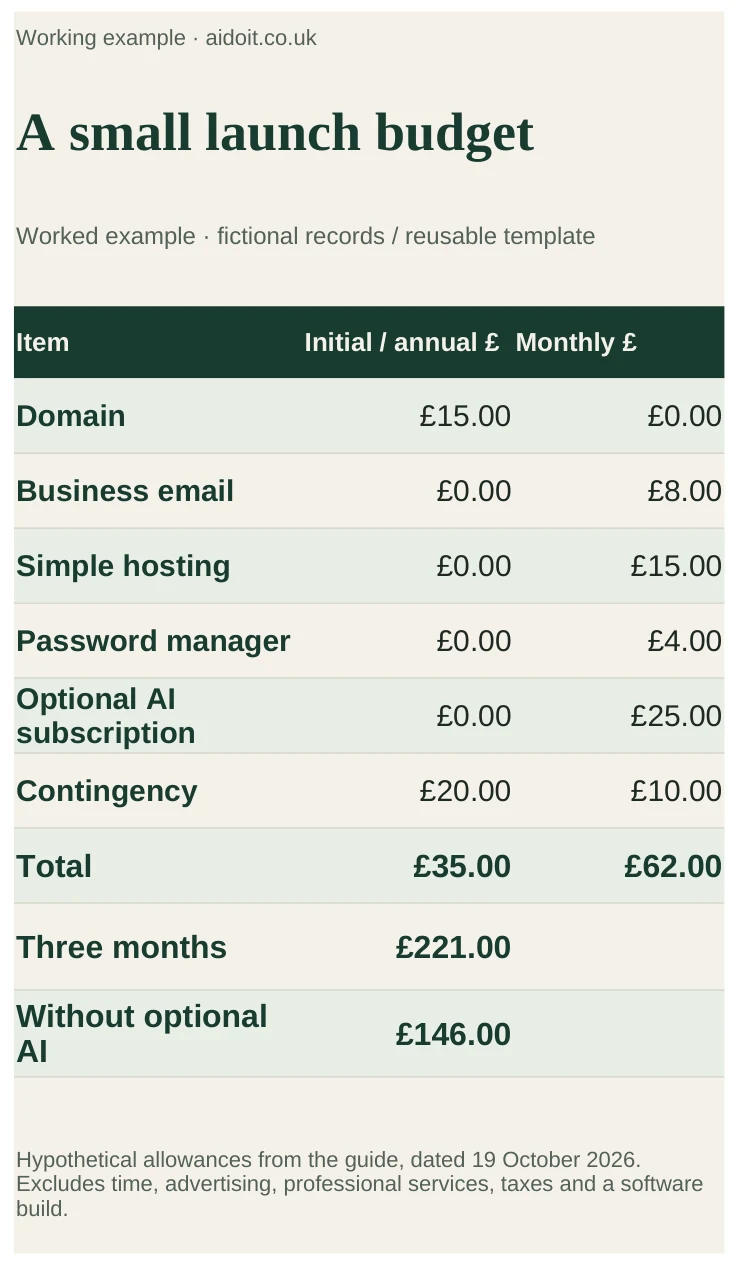
Assume one founder, a small enquiry-led site, one email user and manual follow-up. These rounded allowances are chosen for budgeting; replace them with written prices for your selected providers and check commercial-use eligibility.
| Item | Initial or annual allowance | Monthly allowance | Why it is here |
|---|---|---|---|
| Domain | £15 per year | £0 | A business-controlled address |
| One business email user | £0 | £8 | Enquiries and account notices |
| Simple hosting or page tool | £0 | £15 | Publish the offer and collect enquiries |
| Password manager | £0 | £4 | Keep account credentials organised |
| One AI subscription, optional | £0 | £25 | Drafting and planning support |
| Contingency | £20 initially | £10 | Small variations and overlooked charges |
| Total planning cash | £35 initially | £62 | Excludes the items discussed below |
Under these assumptions, the first three months require £35 + (3 × £62) = £221. Without the optional AI subscription, the example is £146. Neither total includes founder time, advertising, professional services, taxes or a paid software build.
Some providers may offer suitable free tiers; others restrict commercial use or have limits that make them unsuitable. Do not assume “free hosting” means every component of a business product is free. Confirm form storage, email sending, backups and what happens when limits are exceeded.
3. Add the costs your business actually creates
For a product with accounts or payments, add development, database usage, transactional email, monitoring and support. Include any security or accessibility review the product needs. For a service, consider insurance, agreements, delivery tools and time spent on each customer.
Your business structure affects registration, accounting and filing responsibilities. Check GOV.UK and obtain relevant advice instead of treating the technology budget as the full cost of trading. Consider VAT, an ICO data protection fee where applicable, refunds, chargebacks and sector-specific requirements separately.
List paid marketing as an experiment with a maximum budget. Do not describe advertising spend as a predictable customer-acquisition cost until you have measured suitable customers through the complete process.
4. Calculate variable fees with an example
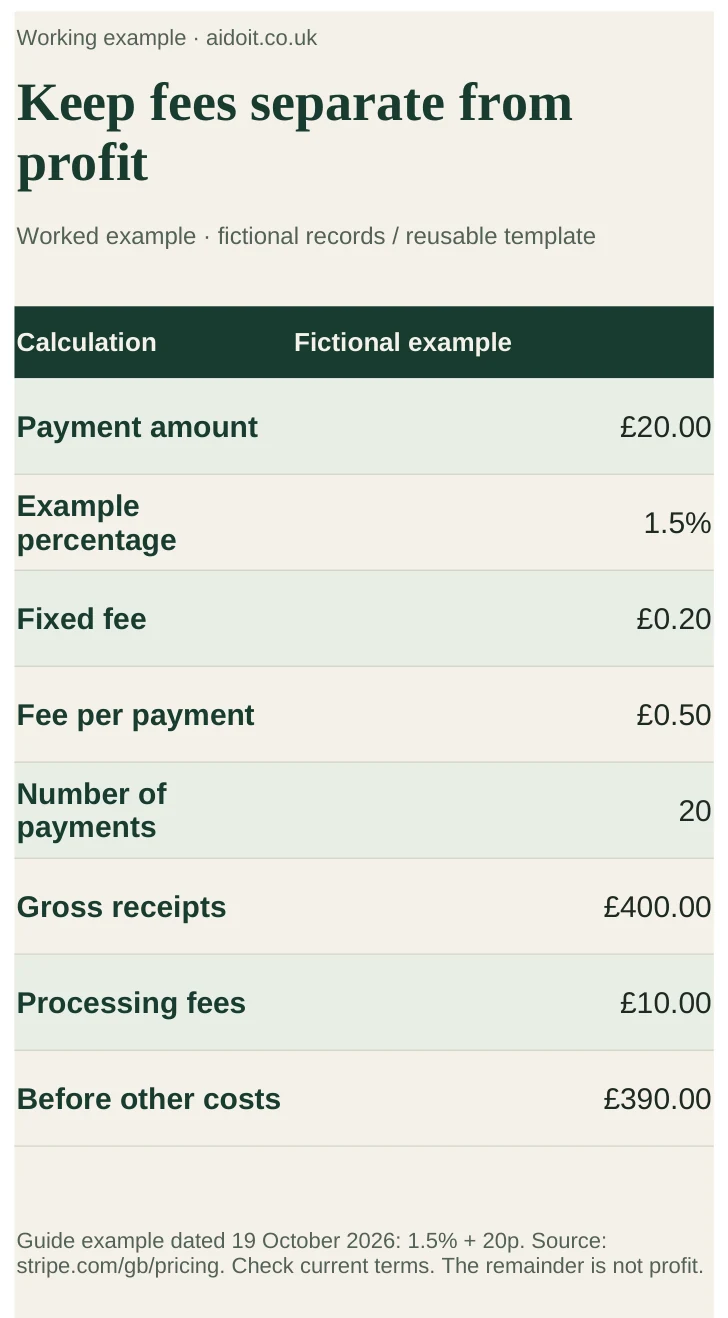
Stripe's UK pricing page, checked for this revision, lists standard UK card processing at 1.5% + 20p per successful transaction. Rates differ for premium, overseas and other payment types, and additional products or services can add fees.
For a £20 payment at that example rate, processing is £0.30 + £0.20 = £0.50. Twenty such payments produce £400 gross receipts and £10 in those processing fees. The £390 remainder is before delivery costs, other fees, refunds and tax. It is not profit.
For an AI-powered product, model the cost per completed customer task rather than per prompt alone. Include retries, longer inputs, failures and any paid tools used. Check whether your subscription includes API usage; do not assume it does. An alert may warn about spend without enforcing a hard limit.
5. Give every subscription a reason to exist
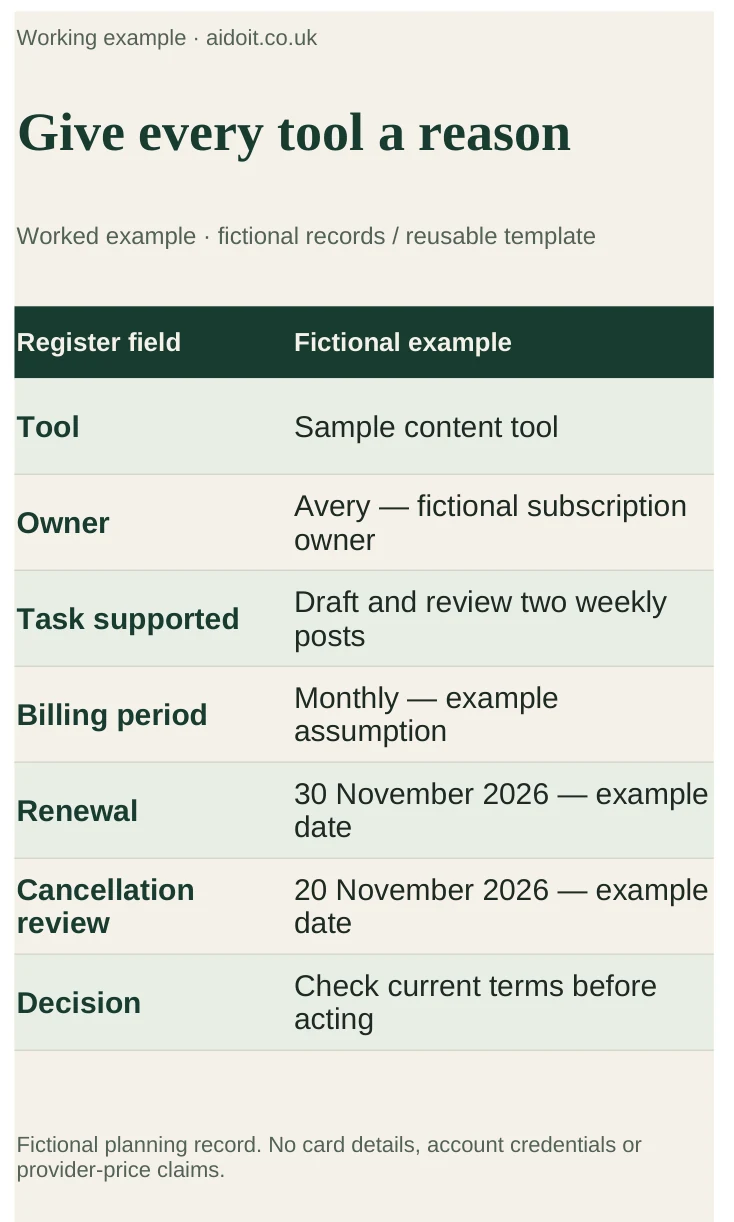
Record each tool, owner, billing frequency, cancellation date and the task it supports. Review after the first month. If you have three customer conversations, a spreadsheet may be enough; a paid CRM can wait until the process needs it.
AI can help organise your budget, but supply the actual quotes and ask it to show the arithmetic. Recalculate totals yourself. A generated price without a dated source is not a supplier quote.
What to watch for
Check for introductory prices that rise later, annual contracts mistaken for monthly cancellation, VAT excluded from displayed prices and multiple subscriptions doing the same job. Use the amount payable at checkout in your cash plan.
Verdict and next step
Write a budget for the next test, not for the business you might run in two years. Replace every allowance above with a current price and list what the total excludes. Use the account setup guide to assign owners and the startup checklist to decide what can wait.
Sources
- Stripe UK pricing — dated payment-fee example; other charges and terms may apply.
- GOV.UK: Set up a business — structure, registration and responsibilities.
- ICO: Data protection fee — check whether your organisation must pay.